
Search
12 results for “cognition”
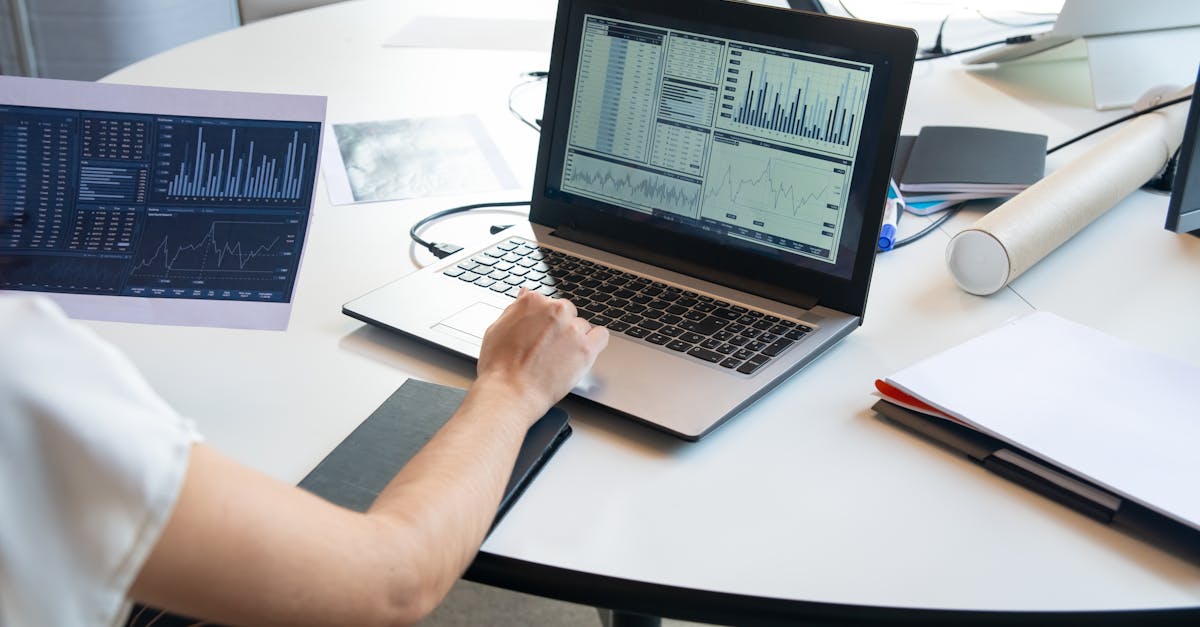 Data & Analyticsby Marcus Hale
Census Bureau's Noise Infusion Ban: Restoring Data Accuracy for Critical Statistics & Public Trust
The U.S. Census Bureau's recent decision to implement a **Census Bureau noise infusion ban** for specific statistical products, such as the **Detailed Demographic and Housing Characteristics File (DHC)** and certain **American Community Survey (ACS) tables**, marks a fundamental re-evaluation of how national statistical agencies balance individual privacy with the essential utility of public data. This isn't merely a technical rollback; it's a direct response to the demonstrable degradation of granular data accuracy caused by the previous Differential Privacy (DP) implementation. For instance, initial implementations rendered population counts for block groups with fewer than 100 residents wildly inaccurate, sometimes reporting zero where dozens lived, or vice versa, according to analyses by demographers at the University of Minnesota's IPUMS project. This widespread distortion carries significant implications for local governance, equitable resource allocation, and the very future of public trust in official statistics. As the National Academies of Sciences, Engineering, and Medicine (NASEM) documented in their 2021 report, "The 2020 Census and Differential Privacy: An Update," the chosen methodology often produced implausible results, directly hindering the ability to identify and address disparities. The ban, specifically targeting the noise-based DP methodology for these critical products, represents a pragmatic recognition that the chosen implementation imposed an unacceptable cost on the accuracy of disaggregated data, which is indispensable for effective policy and research.
 Web Securityby Marcus Hale
Cloudflare Turnstile's WebGL Fingerprinting: A Technical Unmasking of its Privacy Contradictions
# Unmasking Cloudflare Turnstile: A Technical Deep Dive into the WebGL Fingerprinting Privacy Contradiction In the escalating conflict against automated web threats, the fundamental definition of a "human" online has become a contested domain. Cloudflare's Turnstile, introduced in 2022, was heralded as a privacy-centric evolution, promising to verify legitimate users without the cognitive burden of traditional CAPTCHAs or the perceived invasiveness of personal data collection. Its core value proposition was compelling: seamless, privacy-preserving bot detection. However, a deep technical examination reveals a profound contradiction at the core of Turnstile's operation: its reliance on advanced browser fingerprinting, specifically leveraging WebGL, generates a highly stable, entropy-rich signal that can serve as a potent foundation for persistent device identification. This tension between stated intent and technical execution warrants a rigorous, granular analysis, moving beyond general privacy concerns to the specifics of WebGL's identification capabilities. ## The Systemic Obsolescence of Explicit CAPTCHAs The era of traditional CAPTCHAs is demonstrably over, rendered obsolete by the relentless advancement of machine learning and distributed botnet architectures. By 2019, Google's reCAPTCHA v2 was routinely bypassed by sophisticated adversaries, with some services offering solutions for as little as $3 per 1,000 CAPTCHAs, making large-scale automation economically viable for malicious actors. Research by security firms like Arkose Labs has detailed how botnets leverage human click farms, advanced image recognition (OCR) for text-based challenges, and even reinforcement learning to navigate more complex tasks. For example, text-based CAPTCHAs were largely defeated by OCR algorithms exceeding 90% accuracy as early as 2017. Similarly, image-based challenges, once thought robust, succumbed to object detection models within milliseconds. This systemic failure force...
 Technologyby Elena Rodriguez
Fortifying the Digital Frontier: A Critical Examination of Online Age Verification
The proliferation of facial recognition technology has sparked a cat-and-mouse game between developers and children, with 62% of facial recognition systems vulnerable to deception by simple disguises, highlighting the need for more robust age verification methods to protect children's online safety
 Science & Researchby Marcus Hale
Real-Time Dream Communication: Unlocking Lucid Learning & Therapy in Sleep
The entrenched scientific view has long compartmentalized the sleeping brain as an inert, self-contained system, primarily tasked with memory consolidation. This reductionist paradigm is no longer tenable. A seminal 2021 study in *Current Biology*, led by a multinational collaboration including Northwestern University and Sorbonne Université, presented irrefutable empirical validation for a profound capability: real-time, bidirectional communication with individuals immersed in a lucid dream state. This is not the stuff of anecdotal reports or speculative psychoanalysis; it represents a quantifiable, scientific interface to conscious awareness during Rapid Eye Movement (REM) sleep, compelling a fundamental re-evaluation of the mind's operational architecture and its intrinsic permeability. This breakthrough signifies more than observing neural activity during sleep; it engineers a direct, interactive conduit. Researchers can now pose specific queries or deliver targeted stimuli and elicit intentional, pre-arranged responses from dreamers who are fully meta-cognitively aware. This capability underpins the **Interactive Dream Cognition (IDC) Hypothesis**: that the lucid dream state, when actively engaged via external communication, functions as a distinct, co-creative cognitive environment. Within IDC, the boundaries between external input and internal mentation blur, unlocking a novel class of cognitive operations distinct from both waking thought and passive sleep processes. This challenges foundational tenets of cognitive psychology concerning consciousness, memory encoding, and skill acquisition. The implications are profound, shifting sleep from a period of cognitive shutdown to a potential domain for accelerated learning and highly personalized therapeutic modalities. The critical insight is this: the interface between waking and dreaming consciousness is not a rigid barrier but a dynamic, permeable membrane, offering unprecedented opportunities for direct cognitive engagement and manipulation.
- Technologyby James Wilson
Apple's Smart Glasses: A Game-Changer for Wearables
Get ready for a new era in wearables as Apple's smart glasses launch in 2027, bringing augmented reality to the masses with improved display resolution, increased field of view, and enhanced gesture recognition.
- Businessby Sarah Jenkins
France's Bold Move: Repatriating Gold Reserves from the US
**France Recalls Last Gold Reserve from US**: In a bold move, France's central bank has repatriated its last remaining gold reserves from the US, yielding a $15 billion gain for the French government. This decision reflects a growing recognition of the importance of gold as a safe-haven asset and a store of value in times of economic uncertainty.
- Technologyby Leo Martinez
OkCupid Sued Over 3M User Photos Shared with Facial Recognition Firm
OkCupid is facing a lawsuit for sharing 3 million user photos with a facial recognition firm without consent, raising concerns about data privacy and the need for greater transparency in online dating platforms.
- Technologyby Leo Martinez
OkCupid's Massive Facial Recognition Data Leak Exposed
OkCupid has been accused of sharing millions of user photos with a facial recognition firm, sparking a heated debate about data privacy.
- Technologyby Sarah Jenkins
OkCupid's Data Sharing Practices Under FTC Investigation
OkCupid's decision to share 3 million user photos with a facial recognition firm without consent is a serious breach of trust, highlighting the importance of data protection and online safety.
- Artificial Intelligenceby Marcus Hale
Revolutionizing Speech Recognition with Cohere Transcribe
Cohere Transcribe is a cutting-edge speech recognition solution that leverages AI to deliver accurate and efficient transcriptions, supporting over 20 languages and transforming industries like media, education, and healthcare.
- Technologyby Leo Martinez
Math and the Mind in the Age of AI: Evolution and Impact
As AI advances, mathematicians and cognitive scientists are reevaluating the role of human thought in mathematical discovery, leading to breakthroughs in understanding human cognition and developing more effective AI systems.
- Science and Technologyby Marcus Hale
Parrots' Surprising Cognitive Abilities
Parrots have long been known for their intelligence and mimicry abilities, but recent research reveals a surprising fact about their brain structure.




